-
tel: +86-133 3812 3788
-
email: erwpipemill@gmail.com

EN
Complete ERW Tube Mill Line Configuration: What Equipment Is Usually Included?
May 06, 2026
When buyers ask for an ERW tube mill, they often focus on the machine model and tube size range. But a tube mill project is usually a complete production line. The line configuration affects production stability, weld quality, tube size accuracy, cutting quality, operator work, spare parts, and final investment.
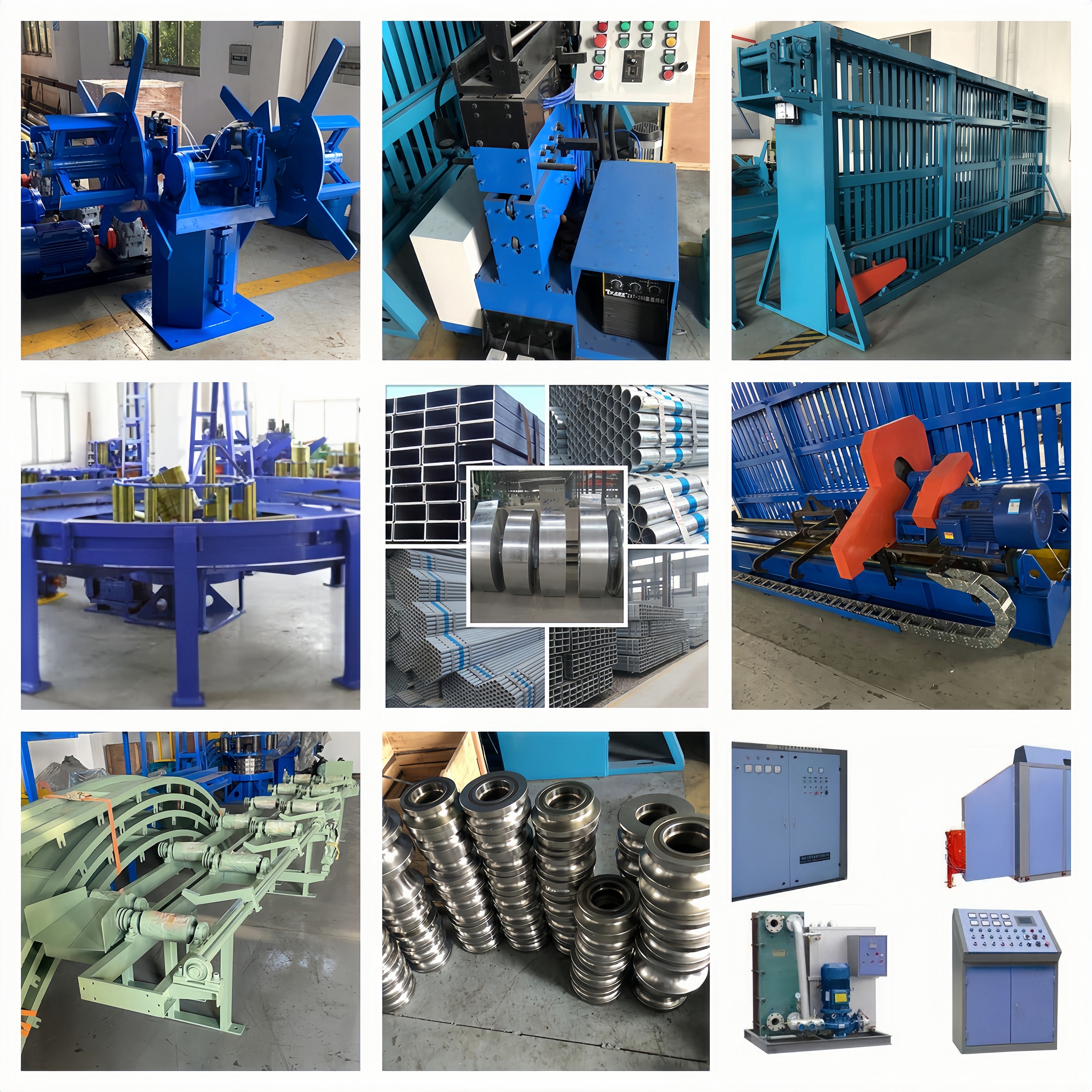
This guide explains what equipment is usually included in a complete ERW tube mill line and what buyers should confirm before ordering.
Why Line Configuration Matters
A tube mill is not only one forming machine. It is a connected production system. If one section is not suitable, the whole line may face production problems, such as unstable strip feeding, poor forming, weld defects, tube size deviation, rough cutting, or frequent downtime.
The correct configuration should be selected according to exact tube size, wall thickness, raw material, tube shape, finished tube requirement, workshop condition, and budget.
Typical ERW Tube Mill Process Flow
A common high frequency welded tube mill line may include the following process:
- Uncoiler
- Shearing and butt welding machine
- Accumulator
- Forming section
- High frequency welding section
- Sizing section
- Cutting section
- Run-out table
- Packing or stacking system if required
The final line may be adjusted according to tube size range, wall thickness, material, production speed, automation level, and buyer preference.
Uncoiler
The uncoiler holds the steel coil and feeds strip into the line. Common choices include manual mechanical uncoiler, pneumatic uncoiler, and hydraulic uncoiler. The right type depends on coil weight, strip width, production requirement, and budget.
For heavier coils or more convenient operation, a hydraulic uncoiler may be discussed. For smaller projects, a simpler uncoiler may be suitable depending on coil condition.
Shearing and Butt Welding Machine
This section helps connect the end of one steel strip coil with the beginning of the next coil. It supports more continuous production and reduces downtime caused by coil change.
The configuration should match strip width, strip thickness, and production requirements. Buyers should confirm whether the quotation includes manual shearing, mechanical shearing, or a more advanced shearing and welding system.
Accumulator
The accumulator stores strip so the tube mill can keep running while coil joining is prepared. Common options include vertical accumulator and horizontal spiral accumulator.
The choice depends on line speed, workshop layout, strip size, budget, and production requirement. A suitable accumulator can improve continuous production and reduce stop-start problems.
Forming Section
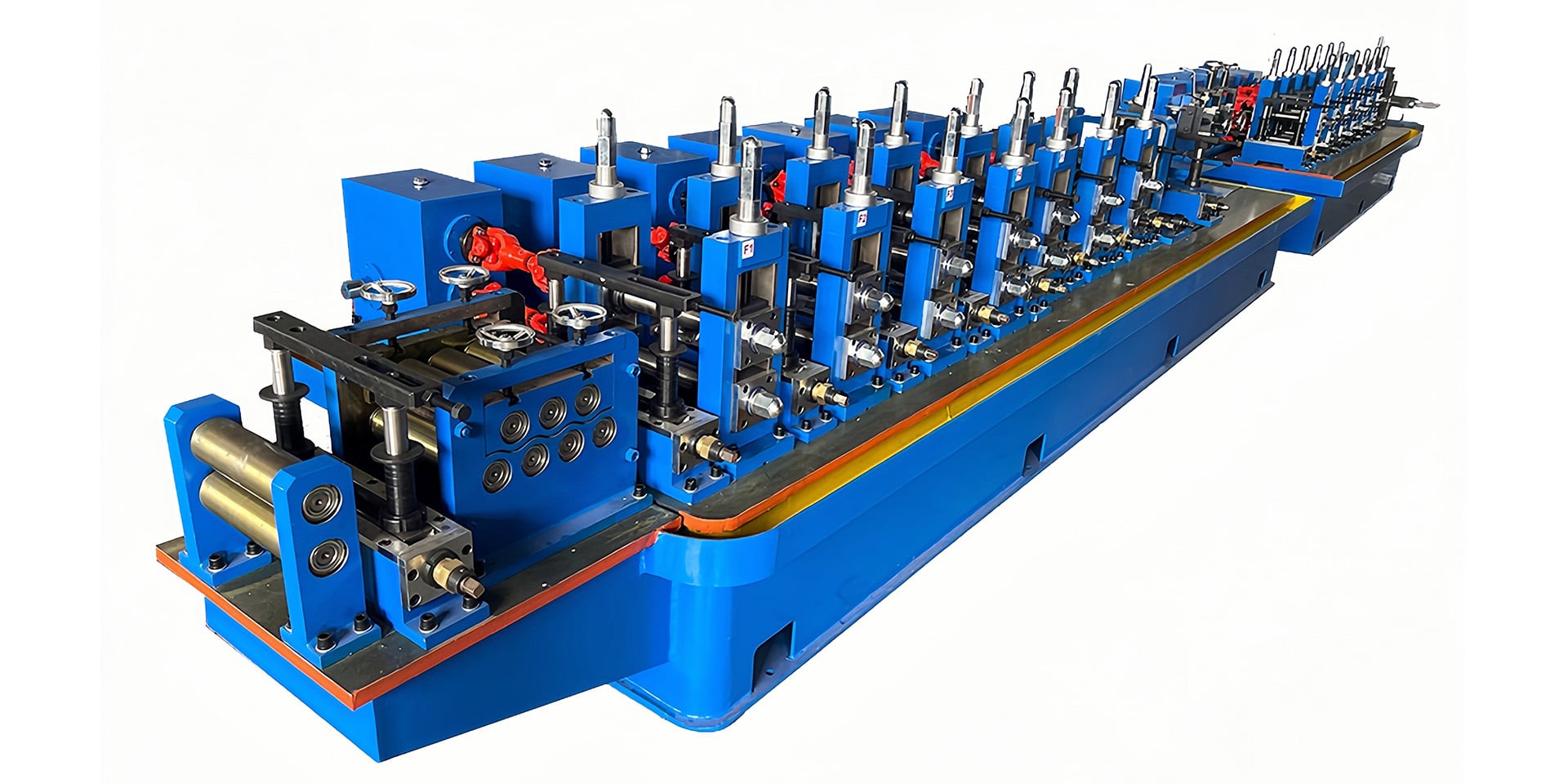
The forming section gradually forms the steel strip into a round tube shape before welding. This section is critical for tube forming stability and weld seam position.
Roll tooling, stand structure, alignment, and adjustment accuracy all affect tube quality. Buyers should send exact tube specifications so the supplier can check the suitable forming design and tooling plan.
High Frequency Welding Section
The high frequency welding section heats and welds the strip edges. The HF welder power should be selected according to tube size, wall thickness, material, and production speed.
The welding section may also include induction coil, ferrite impeder, squeeze rolls, cooling, and weld seam treatment parts depending on configuration. If buyers need GI pipe weld seam zinc spraying, this should be discussed during project planning.
Sizing Section
The sizing section helps control the final tube dimension and shape. It is important for round tube accuracy and for square or rectangular tube production.
If the buyer needs round, square, and rectangular tubes, the sizing and tooling design should be checked carefully according to each tube size and wall thickness.
Cutting Section
The cutting system cuts the welded tube to required length. Common choices include hot friction saw and cold saw cutting machine.
A cold saw cutting machine may be selected when cleaner tube ends and better cutting quality are important. A hot friction saw may be suitable for some standard production requirements. The final selection depends on tube size, wall thickness, line speed, finished tube use, and budget.
Run-Out Table and Packing
The run-out table receives finished tubes after cutting. Depending on the buyer's production requirement, the line may use impact-free fall, pneumatic discharge, motorized rotating table, automatic packing, or stacking equipment.
This section affects finished tube handling and labor arrangement, especially for higher production volume or longer tubes.
Optional Equipment
Optional equipment should be selected according to real production needs, not added blindly. Common optional equipment includes:
- Cold saw cutting machine
- Hot friction saw cutting
- Horizontal accumulator
- Vertical accumulator
- Hydraulic uncoiler
- Zinc spraying machine for GI pipe weld seam
- Automatic packing or stacking system
- Slitting line
- Cut to length line
Information Needed for Configuration Selection
- Tube shape: round, square, rectangular, or mixed production
- Exact tube size and matching wall thickness
- Raw material and steel grade if available
- Main tube products and less common tube products
- Required cutting quality
- Need for zinc spraying, packing, slitting, or other options
- Country, voltage, workshop size, and purchase time
- WhatsApp or email and company name
FAQ
Is every ERW tube mill line configuration the same?
No. The line configuration should be adjusted according to tube size, wall thickness, material, tube shape, cutting requirement, workshop condition, and budget.
Do I need a slitting line with my tube mill?
It depends on whether you buy ready slit strips or process steel coils yourself. If you want to slit coils in-house, a slitting line may be discussed as part of the project.
Should I choose cold saw or hot friction saw?
The choice depends on tube end quality requirement, tube size, wall thickness, line speed, material, and budget. XFX can discuss the suitable cutting system after reviewing your requirements.
Can XFX customize the complete tube mill line?
Yes. XFX can discuss custom tube mill solutions based on tube specifications, material, workshop layout, optional equipment, installation, and service needs.
Ask XFX to Check Your Complete Tube Mill Configuration
XFX Tube Mill Machinery Co., Ltd. manufactures high frequency welded tube mills, ERW tube mills, HF welders, cutting saws, zinc spraying machines, roll tooling, uncoilers, accumulators, run-out tables, and related equipment.
Send your tube size list, wall thickness, material, country, voltage, workshop plan, and required configuration. XFX will help check a suitable complete ERW tube mill line configuration.
View ERW tube mill machines, check uncoiler options, compare cutting saw systems, or send your line configuration request to XFX.
Recent Posts

October 26, 2016
The Most Successful Engineering ContractorJun 09, 2026
How to Reduce Scrap Rate in ERW Tube Mill ProductionRequest a Tube Mill Quote
Tube Mill Inquiry Information
Line Quantity
Unit
Set
Please send your tube shape, exact tube size, wall thickness, raw material, country, purchase time, WhatsApp or email, and company name. XFX will help check the suitable tube mill model and configuration for your production plan.