-
tel: +86-133 3812 3788
-
email: erwpipemill@gmail.com

EN
How to Plan the Entry Section of an ERW Tube Mill Line
Jun 04, 2026
When buyers compare an ERW tube mill line, they often focus first on the forming section, HF welding, sizing section, and cutting system. These parts are important, but the entry section also has a direct effect on continuous production. If coil feeding, strip joining, and strip storage are not planned properly, the tube mill may stop too often even when the main machine itself is suitable.

This guide explains how overseas buyers should review the entry section of an ERW tube mill line, including the uncoiler, shearing and butt welding machine, and accumulator. The goal is simple: help you discuss the full line scope more clearly before quotation.
Why the Entry Section Matters in Tube Mill Production
The entry section prepares steel strip before it enters forming and welding. A typical ERW tube mill line starts from steel coil loading, uncoiling, strip end preparation, strip joining, and strip storage. If this part is weak, the operator may need to stop the line frequently for coil change and strip connection.
For buyers, this means the entry section should not be treated as a small accessory. It should be matched with coil weight, strip width, wall thickness, production speed, workshop space, and the expected production rhythm.
1. Start from Coil Weight and Strip Width
The uncoiler should be selected according to the steel coil used in your factory. Buyers should confirm coil weight, coil inner diameter, coil outer diameter, strip width, and material type before choosing the uncoiler configuration.
A small light-duty line may use a simpler uncoiler. A larger or heavier tube mill project may require a more stable pneumatic or hydraulic uncoiler. The purpose is not to choose the most expensive option, but to choose a configuration that can feed the strip safely and steadily.
2. Do Not Ignore Strip End Preparation
When one coil is finished, the strip end needs to be prepared and connected with the next coil. This is where the shearing and butt welding machine becomes important. A cleaner strip joint helps reduce interruption risk before the strip enters the forming section.

Buyers should ask whether the strip joining method is suitable for their material thickness, production speed, and operator skill level. For some projects, a simple manual solution may be enough. For other projects, hydraulic shearing and welding support can improve working efficiency and consistency.
3. Decide Whether the Line Needs an Accumulator
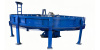
An accumulator stores strip so the main tube mill can keep running while operators prepare and join the next coil. Without enough strip storage, the forming and welding sections may need to stop during coil change.

Accumulator selection depends on tube mill speed, strip width, available space, and expected production continuity. Vertical accumulator and horizontal spiral accumulator options should be discussed according to the real project, not selected only by habit.
4. Match Entry Equipment with the Main Tube Mill Model
The entry section should match the tube mill model. For example, a small tube mill for light tube production does not need the same entry section as a large pipe production line. The same logic applies to wall thickness and strip width.
Before quotation, buyers should send specific tube information such as:
- Round tube: Φ25mm × 1.2mm
- Square tube: 40×40mm × 1.5mm
- Rectangular tube: 40×60mm × 2.0mm
This helps the supplier check whether the uncoiler, strip joining equipment, accumulator, forming section, welding power, and cutting system are matched as one complete line.
5. Think About Operator Workload
A tube mill line is not only a machine list. It is a production system operated by people. If the entry section is too manual for the expected production volume, operators may feel pressure during coil change and strip joining. If the configuration is too complex for the factory's actual needs, the investment may not be necessary.
The better choice is a practical balance between production continuity, budget, operator skill, and maintenance convenience.
6. Include Entry Section Details in the Quotation Scope
When comparing quotations, buyers should check whether the entry section is clearly listed. Some quotations look cheaper because important equipment details are not included or are described too generally.
A clearer quotation should explain:
- Uncoiler type
- Coil weight and strip width support
- Shearing and butt welding method
- Accumulator type
- Basic line flow
- Optional upgrades
- Installation and training support
Common Entry Section Configurations
A typical entry section may include the following equipment:
- Manual, pneumatic, or hydraulic uncoiler
- Straightening or strip guide support if required
- Shearing and butt welding machine
- Vertical accumulator or horizontal spiral accumulator
- Entry guide before forming section
Related Product Pages
- Material Uncoiler for ERW Tube Mill Lines
- Shearing and Welding Machine for Tube Mill Strip Joining
- Tube Mill Accumulator for Continuous Production
- High Frequency Welded Tube Mill Solutions
- Tube Mill Auxiliary Equipment
FAQ
Does every ERW tube mill need an accumulator?
Not always. It depends on production continuity requirements, line speed, strip width, workshop layout, and budget. For many continuous production projects, an accumulator is important because it reduces line stops during coil change.
How should I choose between manual, pneumatic, and hydraulic uncoiler?
The choice depends on coil weight, strip width, line size, and operating requirement. Heavier coils and larger lines usually need a stronger and more stable uncoiler configuration.
Can entry section equipment be customized?
Yes. XFX can help adjust the entry section according to your coil specification, tube size, wall thickness, production plan, and workshop layout.
What information should I send before discussing the entry section?
Please send tube shape, exact tube size, wall thickness, raw material, coil weight, strip width if available, country, purchase time, and WhatsApp or email.
Request a Tube Mill Line Review
If you are planning an ERW tube mill project, send your tube size list, wall thickness, coil information, and expected production plan. XFX Tube Mill Machinery can help you review the main tube mill and entry section together, so the quotation scope is clearer and more practical.

Recent Posts

October 26, 2016
The Most Successful Engineering Contractor
Jun 09, 2026
How to Reduce Scrap Rate in ERW Tube Mill Production


Request a Tube Mill Quote
Tube Mill Inquiry Information
Line Quantity
Unit
Set
Please send your tube shape, exact tube size, wall thickness, raw material, country, purchase time, WhatsApp or email, and company name. XFX will help check the suitable tube mill model and configuration for your production plan.